
Hidden Harm in Our Communities — Human Trafficking Doesn’t Just Happen “Somewhere Else”
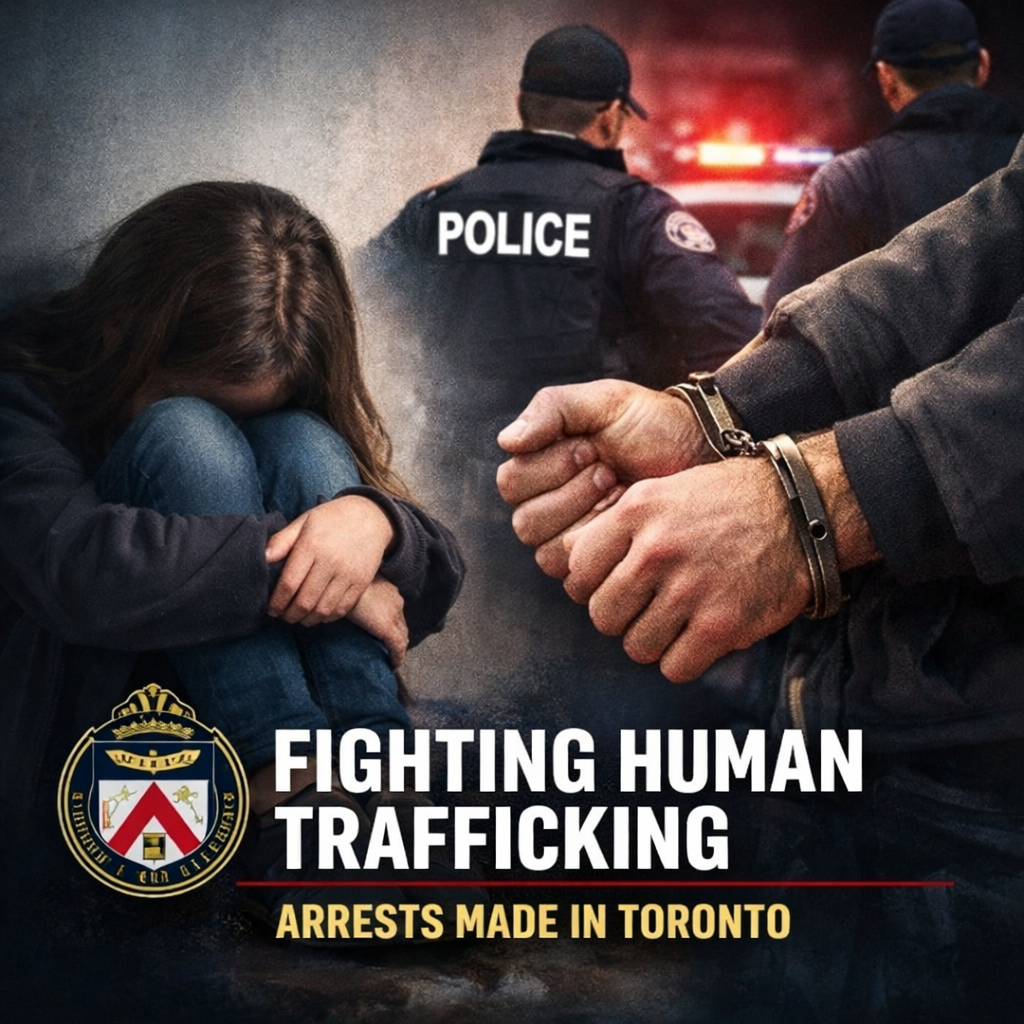
Human trafficking is one of the most coercive and exploitative crimes affecting vulnerable individuals across Canada, yet it often goes unnoticed until police take decisive action. In February 2026, members of the Toronto Police Service’s Human Trafficking Enforcement Team announced multiple arrests connected to an ongoing human trafficking investigation in Toronto. At the core of this case was a troubling allegation: a suspect who is accused of procuring and attempting to traffic an underage female using deception, manipulation, and control to exploit another human being.
What’s particularly disturbing about human trafficking is how easily it can remain hidden — victims are frequently controlled psychologically and financially, forced into situations they cannot escape, and prevented from speaking out. These crimes often go undetected because they occur out of public view and are cloaked behind coercive tactics that silence victims. The recent Toronto case underscores that human trafficking is not just a distant issue; it can affect people in our urban centers and communities close to home.
The Evidence of Exploitation and Abuse
What makes human trafficking especially harmful is the pattern of violations behind it. In this case, investigators identified that the accused communicated with and attempted to receive sexual services from an underage individual and used coercive methods to take advantage of them. The suspect, 24-year-old Ebenezer Kodua of Toronto, was arrested by the Human Trafficking Enforcement Team and has since been charged with serious offences including Procuring a Person Under 18 years, Trafficking in Persons Under 18 years by Recruiting, and Obtaining Sexual Services for Consideration from a Person.
Beyond the specific charges, human trafficking can reveal other disturbing signs: psychological manipulation, financial control over a victim, and the forced surrender of earnings or autonomy. These red flags are symptoms of a larger, systemic issue that requires both law enforcement attention and public awareness.
Investigation, Community Support, and Reporting
Law enforcement’s role is critical, and this arrest stems from extensive investigative work carried out by specialized units trained to identify the hidden mechanisms of trafficking. The Toronto Police Service encourages members of the public to step forward if they have information, offering anonymous reporting options through Crime Stoppers and direct police hotlines. Combined with community vigilance, this helps identify victims sooner and protect those at risk.
Efforts like Project Reproach — the police initiative referenced in the press release — demonstrate how dedicated teams are working collaboratively to disrupt human trafficking networks, bring offenders to justice, and support victims through safe exit strategies and access to resources.
But the solution doesn’t rest solely on law enforcement. Community education and awareness are vital. Recognizing early signs of coercion, understanding how to support victims, and knowing where to report suspicious activity can empower ordinary citizens to be part of the solution. Resources such as local police human trafficking units, crisis hotlines, and online reporting tools provide channels for people to help safely and effectively.
Human trafficking thrives in silence and secrecy. The recent Toronto arrests highlight not only the severity of such crimes, but also the power of coordinated action and community support. If you see something that doesn’t feel right, your voice could help prevent harm and bring accountability to those perpetrating exploitation.
Original Source: Toronto Police Services